“Color is the place where our brain and the universe meet.” — Paul Cézanne
A Day Worth Holding — A Study in Memory, Layered Perception, and Emotional Light
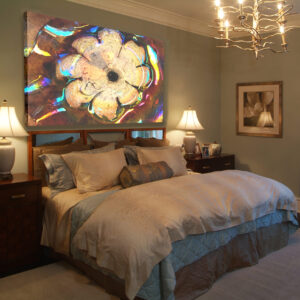
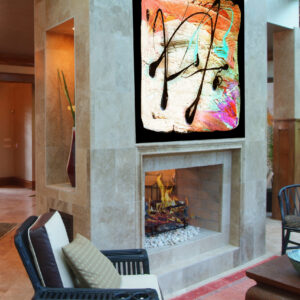
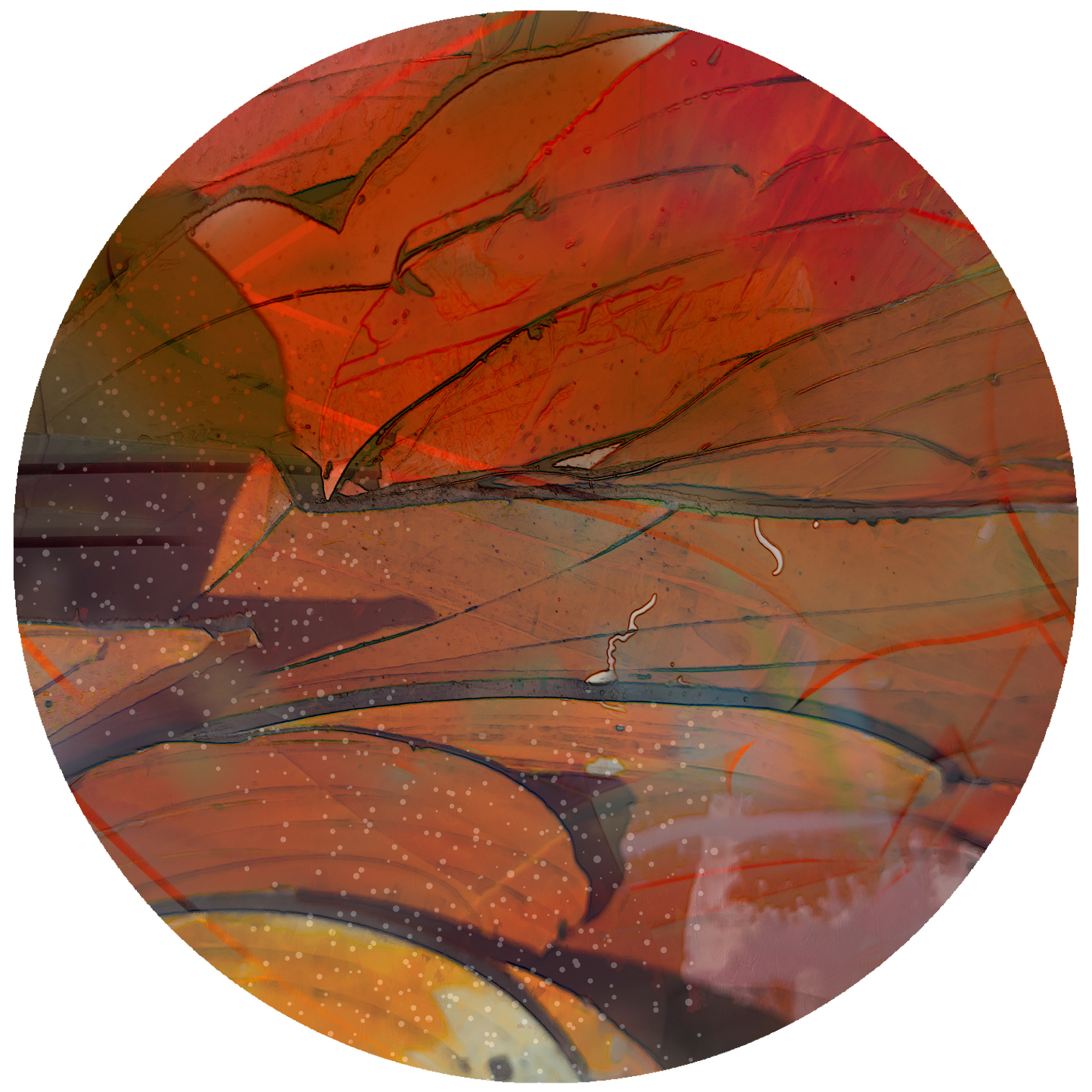
In A Day Worth Holding, Michael John Valentine continues his exploration of abstraction as lived experience rather than visual description. The work does not aim to represent a fixed scene; instead, it preserves the emotional architecture of a moment—one that feels suspended between memory and presence. The painting becomes less an object and more a held sensation, something that resists release.
The title itself suggests reverence for transience. A “day worth holding” is not defined by spectacle, but by emotional resonance—the kind of experience that lingers long after its visual clarity fades. This idea is central to Valentine’s practice, where perception is treated as something layered, fragile, and continuously rewritten.
Overpainting as Accumulated Time
At the core of Valentine’s methodology is his overpainting process, which functions as both structure and philosophy. Each painting begins with an initial compositional gesture, often derived from photographic reference or intuitive abstraction. This foundational layer is not treated as final truth, but as a starting memory—something already incomplete.
From this point, the work evolves through successive layers of acrylic paint. Each application modifies, obscures, or recontextualizes what came before it. Forms emerge, dissolve, and re-emerge again in altered states. Nothing is fully erased; instead, it is absorbed into the evolving surface.
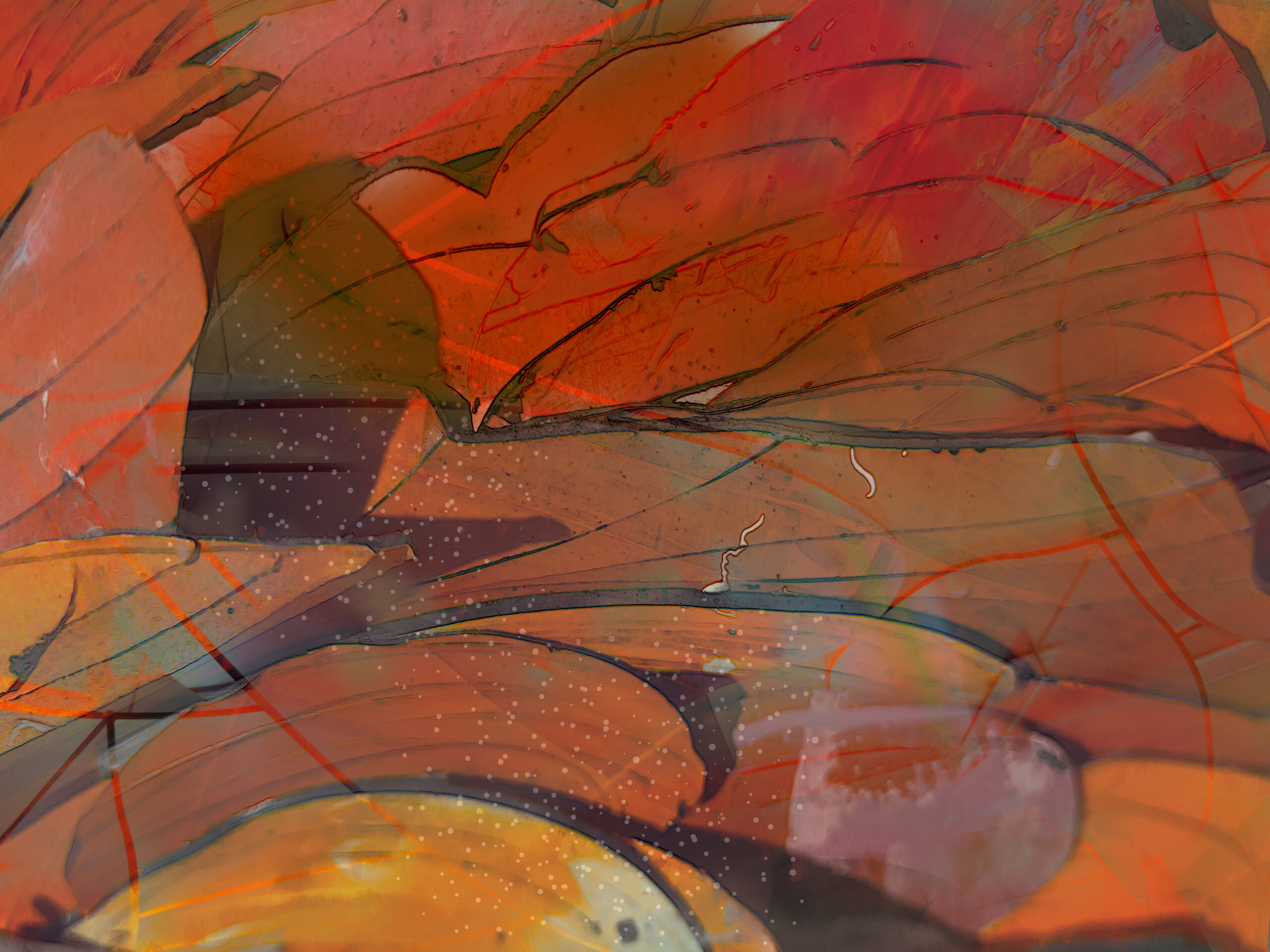
In A Day Worth Holding, this results in a painting that carries visible traces of its own history. Earlier decisions remain embedded beneath translucent or partially covered passages, creating a sense of depth that is not purely spatial but temporal. The viewer is not looking at a single moment, but at a sequence of moments layered into one unified field.
This process gives the work its emotional weight. The overpainting becomes a record of attention over time—each layer a reflection of reconsideration, refinement, and intuitive response. The painting holds its own past within its present surface.
Glazing as Atmospheric Resolution
Once the layered structure reaches its intended density, Valentine introduces glazing as a means of unifying and softening the composition. Thin, translucent applications of pigment and medium are carefully applied to adjust tonal relationships, control light interaction, and create atmospheric continuity.
In A Day Worth Holding, glazing functions as the emotional climate of the work. It dissolves abrupt transitions between forms, allowing color fields to merge into one another without losing their underlying complexity. Light appears to pass through the painting rather than simply reflect off its surface.
This stage is not about simplification, but refinement. The glaze does not eliminate earlier layers; it binds them together into a cohesive perceptual field. Beneath the surface, earlier gestures remain active—faintly visible, like memory beneath thought.
The result is a painting that feels breathable. It carries a sense of internal luminosity, as though the light source is embedded within the structure rather than imposed from outside.
Mixed Media as Unified Perception
Valentine’s practice, while rooted in mixed media, resists fragmentation. Photography, painting, layering, and glazing are not separate disciplines but interconnected stages of a single perceptual process. Each material decision contributes to the evolution of a unified visual language.
In A Day Worth Holding, this unity manifests as oscillation—between clarity and ambiguity, structure and atmosphere, presence and dissolution. At moments, forms assert themselves with precision; at others, they recede into soft fields of color that resist definition.
This shifting dynamic mirrors the way memory itself operates. We do not recall experiences as fixed images, but as partial reconstructions that change depending on emotional proximity and time. The painting embodies this condition visually, allowing perception to remain fluid.
The Emotional Weight of Abstraction
Cézanne’s insight that color is where the brain and the universe meet speaks directly to the essence of Valentine’s work. In abstraction, color is not descriptive—it is experiential. It carries emotional temperature rather than literal meaning.
In A Day Worth Holding, color operates as memory made visible. Warm tones suggest proximity, intimacy, or emotional warmth, while cooler passages introduce distance and reflection. These relationships are not fixed; they shift depending on surrounding layers and viewing context.
Valentine’s overpainting process intensifies this effect. Because colors are repeatedly layered, filtered, and partially obscured, they do not exist in isolation. Instead, they interact across time, creating complex chromatic relationships that feel both deliberate and discovered.
The result is not harmony in a static sense, but equilibrium achieved through accumulation.
The Discipline of Holding
What distinguishes A Day Worth Holding is its commitment to restraint within complexity. Despite the depth of layering and the richness of surface interaction, the painting maintains a sense of calm coherence. This is not simplicity, but control over multiplicity.
Valentine’s overpainting process ensures that no single gesture dominates. Each layer contributes, but none overwhelms. The painting becomes a negotiation between presence and disappearance, where meaning is continuously formed and softened at once.
Glazing reinforces this discipline by unifying disparate elements into a shared atmospheric field. It allows complexity to remain visible while preventing fragmentation.
A Painting That Preserves Experience
Ultimately, A Day Worth Holding is about preservation—not of image, but of sensation. It captures the emotional residue of experience rather than its literal appearance. What is held within the painting is not a scene, but a feeling of being within time itself.
Through overpainting, Valentine constructs a layered history of perception. Through glazing, he transforms that history into atmosphere. Together, these processes create a work that behaves less like an object and more like a memory that has learned how to stay.
The painting does not insist on interpretation. Instead, it offers duration—a space in which looking becomes an act of holding, and holding becomes a form of understanding.
A Special Modern Abstract Series about time, memory, atmosphere, and fleeting perfection.
The Series Includes the following releases- The Shape Of A Perfect Day, A Day Worth Holding, The Calm After Color, The Day That Found Us, Just Before Evening, Before The Day Breaks, A Sky That Wouldn’t Leave, After The Light Fades, A Moment Without End, The Day That Stayed, The Longest Light, One Fine Day
The Exhibition Canvas comes in 3 sizes and goes through several steps that include overpainting with acrylics, signing with acrylics on the front and a final glazing to protect the canvas before being rolled in a sealed tube then a box ( shipping is free in the USA )
The Matted Prints come in 3 sizes and are shipped in a box. ( shipping and handling is free in the US)
The Glossy Poster Print measures 16 x 24 and arrives in a sealed tube that is placed in a box. ( shipping is free in the US )
The 4 Inch Round Peel And Stick Decal is perfect for many applications beyond cars and comes in a sealed envelope ( shipped for free )