“I am seeking. I am striving. I am in it with all my heart.” — Vincent van Gogh
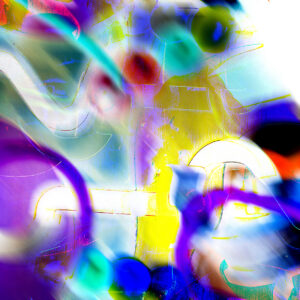
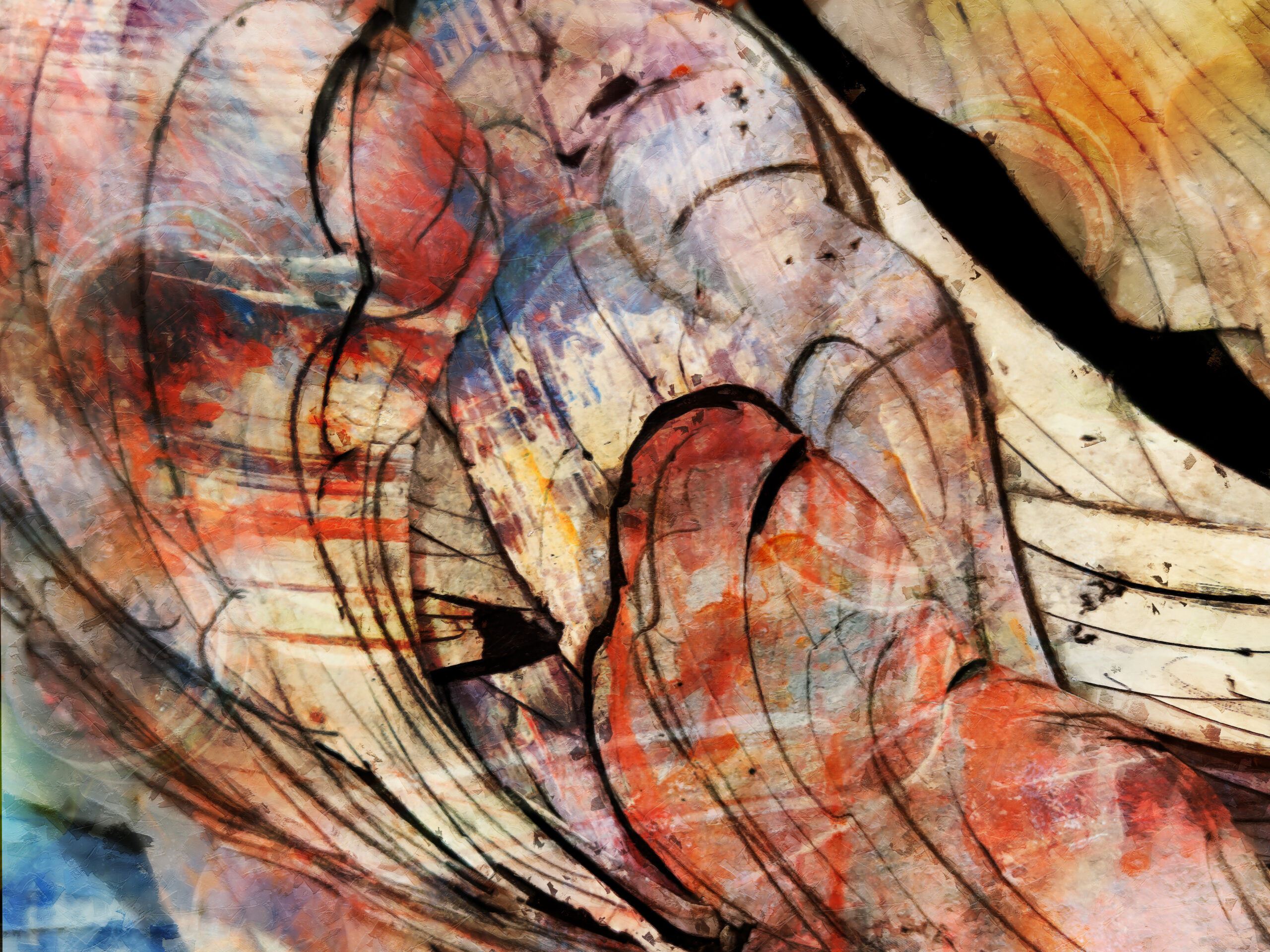
In The Shape of a Perfect Day, Michael John Valentine moves beyond the idea of time and into something more elusive—the architecture of experience itself. This work is not concerned with a literal day, nor with a sequence of moments, but with how a day is felt, remembered, and ultimately shaped in the mind.
What does a perfect day look like when stripped of detail?
Not the events. Not the places. But the impression it leaves behind.
This is the question the painting quietly answers.
At first encounter, the composition presents itself as a convergence of movement and balance. There is an underlying sense of structure—something intentional, almost architectural—yet it never becomes rigid. Forms intersect, dissolve, and re-emerge, creating a rhythm that feels both controlled and instinctive. The viewer senses that there is a framework beneath the surface, but it is one that has been softened, reshaped, and ultimately liberated from definition.
This tension between structure and freedom is central to the work’s impact.
It mirrors the nature of a “perfect day” itself—rarely perfect in its details, but somehow complete in its feeling.
A Process of Construction and Transformation
Like all of Valentine’s work, The Shape of a Perfect Day is rooted in a deeply layered mixed media process that begins long before the final image emerges. The initial stages often draw from original photographic elements—captured moments that provide a compositional backbone grounded in reality. These elements establish direction, perspective, and tonal anchors, but they are never intended to remain intact.
Instead, they are subjected to transformation.
Through the application of acrylics, the original image begins to dissolve. Lines are softened, edges are broken, and recognizable forms are pushed toward abstraction. This is not an act of removal, but of reinterpretation. The photograph becomes a foundation upon which something entirely new can be built.
From here, the work enters its defining phase: overpainting.
Layer upon layer is applied, each one responding to what lies beneath it. Some passages are bold and assertive, introducing new energy into the composition. Others are translucent, allowing earlier layers to remain visible as subtle echoes. This interplay between concealment and revelation creates a surface that is rich with history—one that carries within it the memory of every stage of its creation.
As documented across Valentine’s broader body of work, each piece is “100% authentic starting with original photography, acrylics, glazing—all handmade in house,” reinforcing the handcrafted and evolving nature of the process.
In The Shape of a Perfect Day, this evolution is particularly refined.
There is no single dominant layer. Instead, the painting exists as a convergence of moments, each one contributing to the final composition without overpowering it. Earlier gestures remain visible as faint structures beneath the surface, while later applications bring clarity and cohesion.
This creates a depth that is not simply visual, but temporal.
The Role of Overpainting — Memory Embedded in Surface
Overpainting, in this context, becomes more than a technique—it becomes a philosophy.
Rather than seeking to perfect or finalize the image in a single pass, Valentine allows the painting to develop over time. Each layer is an opportunity to respond, to adjust, to refine. Areas are built up, then reduced. Forms are introduced, then partially obscured. What remains is not a fixed image, but a record of decisions—a visible history embedded within the canvas.
This approach ensures that the work feels discovered rather than manufactured.
The viewer can sense the presence of earlier iterations—subtle shifts in tone, ghosted lines, and textural variations that suggest a deeper complexity beneath the surface. These elements create a kind of visual resonance, where the painting seems to hold more than what is immediately visible.
It holds what came before.
Light, Balance, and Emotional Structure
Light plays a quiet but essential role in shaping the composition.
Rather than acting as a focal point, it is distributed—woven through the painting in a way that guides the viewer’s eye without dictating its path. Some areas appear to emerge, catching illumination and drawing attention, while others recede into softer, more atmospheric passages.
This creates a sense of balance that feels intuitive rather than calculated.
The eye moves fluidly across the surface, following pathways that are suggested rather than defined. There is no singular point of focus—only a continuous unfolding of relationships between color, form, and texture.
This is where the idea of “shape” becomes most apparent.
The painting does not depict a day—it constructs one. Through layered movement, tonal variation, and spatial interplay, it creates a form that feels whole, even if it cannot be fully described. It is a shape not of objects, but of experience.
A Singular Work — The Nature of Authenticity
Because of the layered mixed media foundation and the evolving overpainting process, The Shape of a Perfect Day exists as a one-of-one work.
No two pieces can ever be replicated.
Each layer introduces variables—gesture, timing, material interaction—that shape the final outcome in unpredictable ways. Even the artist himself cannot recreate the exact sequence of decisions that led to this result. What remains is a singular convergence of process, intuition, and time.
For the collector, this is where the work transcends aesthetic appeal.
It becomes a document of creation.
The visible layers, the subtle imperfections, the traces of earlier decisions—all serve as evidence of authenticity. This is not an image reproduced; it is an experience preserved.
Final Reflection
In The Shape of a Perfect Day, Michael John Valentine offers more than abstraction—he offers a way of seeing.
Not the day itself, but its imprint.
Not the events, but their resonance.
It is a painting that does not ask to be understood all at once. It asks to be lived with—to reveal itself gradually, to shift with light, to evolve with the viewer’s own experience.
And in doing so, it becomes something rare:
Not just a representation of a perfect day—
but the feeling of one, held in form.
A Special Modern Abstract Series about time, memory, atmosphere, and fleeting perfection.
The Series Includes the following releases- The Shape Of A Perfect Day, A Day Worth Holding, The Calm After Color, The Day That Found Us, Just Before Evening, Before The Day Breaks, A Sky That Wouldn’t Leave, After The Light Fades, A Moment Without End, The Day That Stayed, The Longest Light, One Fine Day
The Exhibition Canvas comes in 3 sizes and goes through several steps that include overpainting with acrylics, signing with acrylics on the front and a final glazing to protect the canvas before being rolled in a sealed tube then a box ( shipping is free in the USA )
The Matted Prints come in 3 sizes and are shipped in a box. ( shipping and handling is free in the US)
The Glossy Poster Print measures 16 x 24 and arrives in a sealed tube that is placed in a box. ( shipping is free in the US )
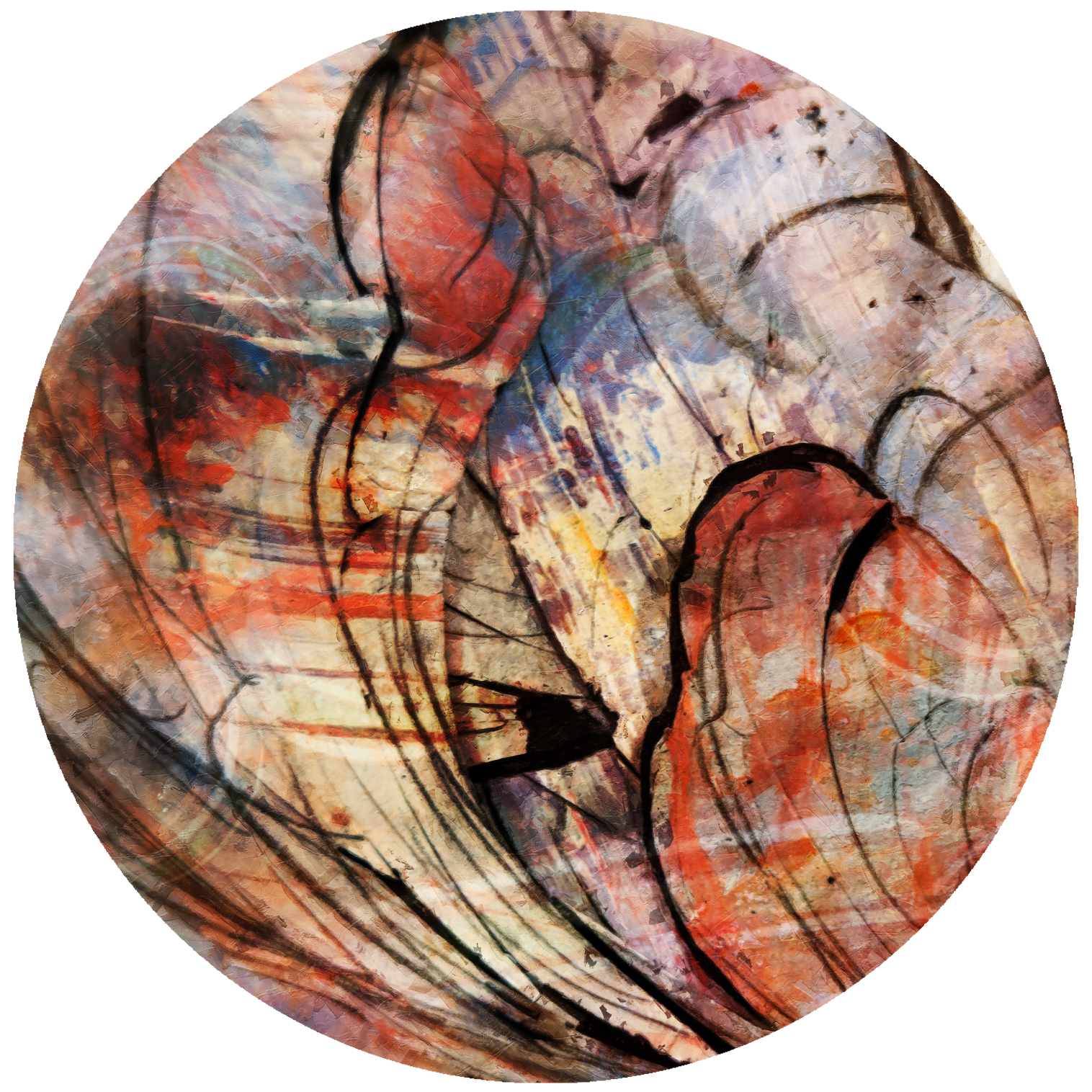
The 4 Inch Round Peel And Stick Decal is perfect for many applications beyond cars and comes in a sealed envelope ( shipped for free )